
Published: January 8, 2026 | Reading time: 7 minutes
When water is gushing from a burst pipe or flooding your basement, every second counts. Knowing how to quickly shut off your water supply can mean the difference between a minor inconvenience and catastrophic damage. Every Lawrenceville homeowner should locate and understand their main water shutoff valve before an emergency strikes.
Why You Need to Know Your Shutoff Valve Location
The average residential water line delivers 6 to 12 gallons per minute under normal pressure. In just 10 minutes, that translates to 60 to 120 gallons of water potentially flooding your home. In an hour, you could have 360 to 720 gallons of water causing extensive damage to floors, walls, furniture, and personal belongings.
During a plumbing emergency, panic and confusion can waste precious time. If you have already located your shutoff valve and practiced turning it, you can respond immediately and confidently when disaster strikes. This simple preparation can save you thousands of dollars in water damage restoration costs.
Step-by-Step: Shutting Off Your Main Water Supply
Step 1: Locate Your Main Shutoff Valve
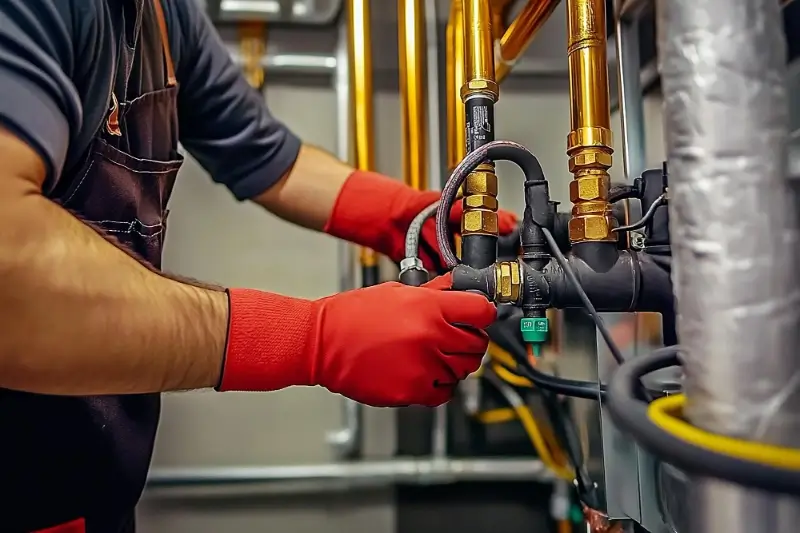
In Lawrenceville homes, the main water shutoff valve is typically found in one of several locations. The most common location is near your water heater, often in a basement, utility room, or garage. The valve will be on the incoming water line before it reaches the water heater. Another common location is near where the main water line enters your home, which could be in a basement, crawl space, or near the foundation.
Some homes have the shutoff valve in a utility closet, often near the washer and dryer connections. In homes without basements, check the garage or an exterior wall near the front of the house. Take time now to find yours before you need it in an emergency.
Step 2: Turn Off the Valve
Once you have located the valve, turn it to the closed position. The method depends on your valve type. For ball valves, turn the lever handle 90 degrees so it is perpendicular to the pipe. For gate valves, turn the round handle clockwise several full rotations until it stops. The valve should turn smoothly. If it resists or will not turn, do not force it, as old valves can break.
Step 3: Verify the Water is Off
After closing the valve, turn on a faucet on the lowest level of your home to verify water flow has stopped. Water may continue to flow briefly as remaining water in the pipes drains out. Once the flow stops completely, you have successfully shut off your water supply.
Step 4: Open Faucets to Drain Remaining Water
After shutting off the main supply, open several faucets throughout your home to drain remaining water from the pipes. Start with the highest faucet and work down. This relieves pressure in the system and reduces the amount of water that could leak from the problem area while you wait for repairs.
Types of Water Shutoff Valves
Understanding the type of valve in your home helps you operate it correctly during an emergency.
Ball Valve
Ball valves have a lever handle that requires only a quarter turn to open or close. When the handle is parallel to the pipe, the valve is open. When perpendicular to the pipe, it is closed. Ball valves are preferred for main shutoffs because they operate quickly and provide a clear visual indication of their status. They are also less prone to failure than gate valves over time.
Gate Valve
Gate valves have a round handle similar to an outdoor faucet. Turning the handle clockwise lowers a gate inside the valve to block water flow. Gate valves require multiple full rotations to open or close completely. Older gate valves can become stuck or corroded, making them difficult to operate. If you have an old gate valve that is hard to turn, consider having a plumber replace it with a ball valve.
Globe Valve
Less common for main shutoffs, globe valves have a round handle and a bulbous body. They operate similarly to gate valves but create more flow restriction. Like gate valves, they turn clockwise to close and require multiple rotations.
Locating Other Important Valves
Beyond your main shutoff, knowing the location of other valves in your home allows you to isolate problems without cutting off water to the entire house.
Individual Fixture Shutoffs
Most sinks, toilets, and appliances have individual shutoff valves on their supply lines. Look for small valves on the wall beneath sinks, behind toilets, and near washing machines and dishwashers. These allow you to isolate a single fixture without affecting the rest of the house.
Water Heater Shutoff
Your water heater should have a shutoff valve on the cold water inlet pipe. Use this valve if your water heater is leaking or needs maintenance. Remember to also turn off the power supply, whether gas or electric, before working on the water heater.
Outdoor Faucet Shutoffs
In Lawrenceville, outdoor faucets should have interior shutoff valves to prevent freezing in winter. These are typically located in the basement or crawl space near where the outdoor faucet penetrates the wall. Close these valves and drain the outdoor faucets before freezing weather arrives.
Safety Tips for Water Shutoff
- Never force a stuck valve. Apply penetrating oil and wait, or call a plumber to replace it.
- Test your main shutoff valve annually to ensure it still works properly.
- If your valve is in a hard to reach location, consider having it relocated to a more accessible spot.
- Tag your main shutoff valve clearly so family members and emergency responders can find it quickly.
- Keep a wrench near gate valves that require tools to operate.
What to Do After Shutting Off Water
Once you have stopped the water flow, assess the situation. If you have a significant leak or burst pipe, call for emergency plumbing service immediately. While waiting for the plumber, remove as much standing water as possible using towels, mops, or a wet vacuum. The faster you remove water, the less damage will occur.
Document the damage with photos and videos for insurance purposes. Move furniture and valuables away from wet areas. If water has reached electrical outlets or appliances, do not touch them and consider turning off electricity to affected areas at your breaker panel.
FAQ: Water Shutoff in Emergencies
What if I cannot find my main shutoff valve?
Check near your water meter, which is often located near the street in a covered box. There may be a shutoff valve there. If you still cannot find it, call a plumber who can locate it and show you where it is.
What if my shutoff valve is stuck or broken?
Do not force a stuck valve, as it may break and cause a bigger leak. Try the shutoff at your water meter if available, and call a plumber to replace the faulty valve as soon as possible.
Should I shut off my water when going on vacation?
Yes, shutting off your main water supply before extended trips is a good practice. This prevents potential water damage from leaks that might occur while you are away.
How do I turn the water back on after repairs?
Open the main valve slowly to prevent water hammer, which is a loud banging caused by sudden pressure changes. Then open faucets slowly to let air escape from the pipes.
Frequently Asked Questions
Where is my main water shut off valve?
Usually one of three places: in a box near the street by the water meter, where the supply line enters the house, or in a garage, basement, or crawl space near the front wall. In Georgia homes it is most often at the meter box or where the line enters the property.
Which way do I turn a water shut off valve?
Clockwise to close, following the standard righty tighty rule. A round gate valve needs several full turns; a lever style ball valve closes with a quarter turn until the handle sits across the pipe rather than along it.
What if the shut off valve will not turn?
Do not force it, as old gate valves can snap. If the valve is seized, use the curb stop at the meter box instead, which usually needs a meter key. Call us on (770) 285-5619 and we can talk you through it or attend. A seized main valve is worth replacing before you need it in an emergency.
Should I turn off the water heater too?
Yes, if the water is off for more than a short period. On a gas unit set it to pilot or vacation; on an electric unit switch off its breaker. This prevents the heating element firing in a tank that is not full, which can damage it.
How do I turn the water back on safely?
Open the valve slowly rather than all at once, to avoid a pressure surge through the system. Then open the highest faucet in the house first and let it run until the air clears and flow is steady, working down to lower fixtures.