
Drain Line Repair in Lawrenceville, GA
Cleaning clears a blockage. Repair fixes the pipe causing it. If your drain pipe is cracked, bellied or collapsed, call and we connect you with an independent local plumber who handles drain line repair in Lawrenceville and Gwinnett County.
Broken Drain Pipe and Drain Line Repair
Cleaning clears the clog. Repair fixes what keeps causing it.
A drain line can fail in several ways. It can crack, separate at a joint, sag into a low spot that holds water, or be crushed by roots or shifting ground. From the sink above, all of them look alike. A camera run is the only way to tell them apart, and it is worth asking for before you agree to any repair.
Call (770) 285-5619 any time and we connect you with a local plumber who handles drain pipe repair near you. We are a referral line, not the repair company, so the plumber is an independent contractor. Ask for the price before any work starts, and ask to see the footage.
If the pipe turns out to be sound and just dirty, drain cleaning or hydro jetting is the right call instead. If the damaged line is the one running out to the street, see sewer line repair.
Signs the line needs repair rather than cleaning:
- The same drain blocks again within weeks of being cleared
- Several fixtures back up at the same time
- A toilet gurgles when the washing machine drains
- Sewage odor indoors, or a damp patch in the yard
- A water stain on the ceiling under a bathroom
- The camera shows standing water in a section that should be dry
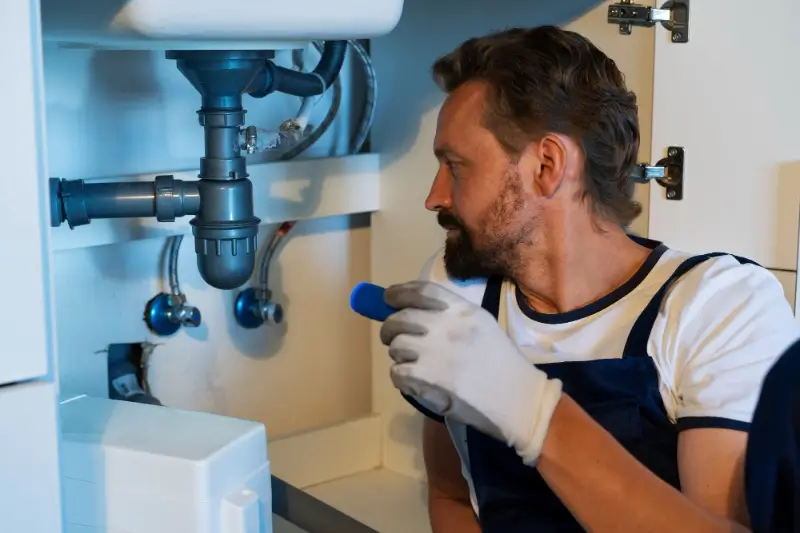
Drain Line Problems a Plumber Can Repair
Diagnosed on camera, then fixed at the damaged spot where that is possible.
Cracked and Broken Pipe
Spot repair of a fractured section in cast iron, clay, PVC or ABS drain lines.
Bellied and Sagging Lines
A section settled into a low spot holds water and causes repeat blockages until it is relaid.
Root Damage
Roots widen joints bit by bit. A plumber can clear the roots and repair or replace the joint.
Collapsed Sections
Where a pipe has crushed and no longer carries flow, that section has to be replaced.
Under Slab Drain Repair
The plumber locates the damaged spot, opens a small section of slab, repairs the pipe and closes it up.
Drain Line Replacement
When repair no longer makes sense, an entire run can be replaced in new PVC.
What Is in the Ground and in the Walls
How the house was built changes where the pipe is and how it gets fixed
Gwinnett homes are built three main ways: slab, crawlspace and full basement. On a basement or crawlspace house, drain lines usually hang where a plumber can see them, which makes a bad joint or cracked pipe easier to reach. On a slab house, the drains run under the concrete, so a plumber has to locate the damaged spot before opening the floor.
Older cast iron drains rust from the inside and eventually flake through, so a stain or damp spot under a bathroom may be a failed section rather than a supply leak. If you are chasing water, read about leak detection too. Newer PVC and ABS drains are less likely to corrode, but they can crack from settling, crushing, or a bad glued joint.
On the way to the street, red clay can move with wet and dry seasons and settle a section of pipe into a belly. That dip collects solids, and the blockage returns a few weeks after every cleaning until the sag itself is corrected.
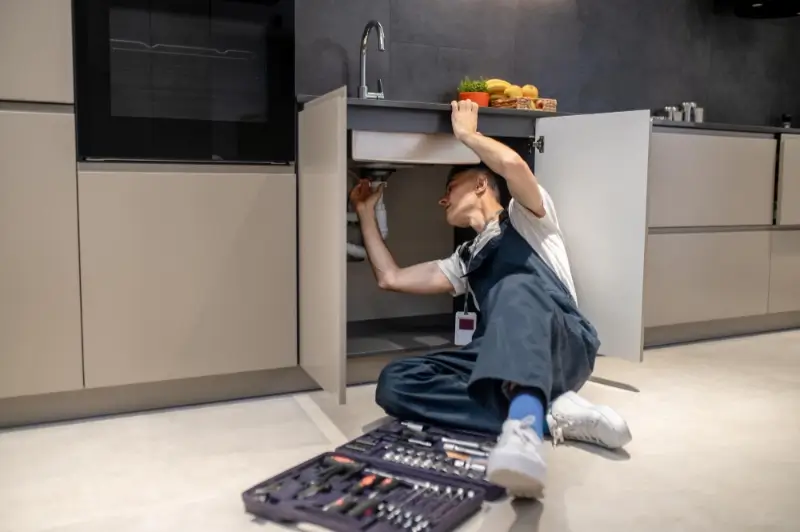
Questions to Ask the Plumber
Get these answered before the digging starts.
Can I see the camera footage?
Ask the plumber to show what is wrong and where the damage sits.
What is the smallest repair that will hold?
Ask why a spot repair will or will not do, and what it would take to replace the whole run.
What is the price?
Ask before any work starts. Depth, access, material and what has to be restored all move the number.
Who restores the floor or yard?
Ask whether the price includes backfill, concrete or drywall, or whether someone else does that.
Drain Line Repair Questions in Lawrenceville
Common questions about broken, cracked and bellied drain pipes.
Call (770) 285-5619. The line is answered 24/7, and we connect you with an independent local plumber who handles drain pipe repair in Lawrenceville and nearby Gwinnett towns. Say where the drain problem is (kitchen, bathroom, slab, crawlspace or yard) and whether it keeps coming back.
Recurrence is the main clue. If a drain blocks again within weeks of being cleared, or several fixtures back up together, the pipe itself may be damaged. Wet spots, a sewer smell or a stain on the ceiling under a bathroom are other signs. A camera run settles it.
A belly is a section of pipe that has sagged into a low spot, usually because the soil under it moved. Water and solids collect in the dip, so the line clogs again and again. Fixing it means digging that section and relaying it so it slopes properly.
Where the pipe is (crawlspace, wall, under a slab or in the yard), how deep, how long the damaged section is, the pipe material, and whether concrete or landscaping has to be put back. Ask the plumber for the price before any work starts.
Often, yes. Many failures are in one section, and a plumber can locate it with a camera and dig a small access pit or open a small section of slab. Where the damage runs a long way, ask about trenchless sewer repair.
Yes. The plumber locates the damaged section, opens a small section of concrete, repairs the pipe and closes it back up. Another option on some houses is rerouting the line. Ask about both, and ask who handles the concrete work.
Related Plumbing Services
Complete plumbing solutions for Lawrenceville homeowners.
Drain Lines in Lawrenceville and Gwinnett County
Why pipe age and soil make this a common repair here.
Older Homes Near Downtown Lawrenceville
Houses close to downtown Lawrenceville tend to be older, and many have cast iron drains inside and clay out to the street. Cast iron corrodes from the inside and eventually flakes through, and clay joints separate. Both can reach the end of their service life around the same time, so repairs often show up in clusters on the same street.
Newer Subdivisions and PVC
Newer Gwinnett subdivisions are built with PVC and ABS drain lines. Those hold up better, but a belly from settled backfill, a cracked fitting or a crushed section can still happen. If a newer house has a recurring clog, ask for a camera run.
Red Clay and Bellied Pipe
Gwinnett's red clay swells and shrinks with the seasons. Over many years that can settle a stretch of drain line into a dip. Water stands there and collects solids, which is why a bellied pipe keeps clogging no matter how often it is cleaned.
Homeowner or Gwinnett DWR?
Gwinnett County Department of Water Resources says the property owner is responsible for the sewer lateral, the private pipe that runs from the house out to the public sewer. The county looks after the public sewer main and the cleanout at the edge of the right of way. A second cleanout closer to the house is the homeowner's. If the stoppage is in the main in the street, that is a county job, and a camera run shows which side of the line the trouble is on. Call Gwinnett DWR if you are not sure where your responsibility ends, and do it before you agree to a dig. Homes in Buford are on the City of Buford's sewer system instead, so those calls go to the city.
Same Drain Blocking Again and Again?
Stop clearing a pipe that is broken. Call and ask for a local plumber who handles drain line repair.