
Published: March 8, 2026 | Reading time: 9 minutes
Sewer line problems are expensive to guess at and relatively cheap to diagnose. The difference between a cleaning, a spot repair, and a full replacement can be thousands of dollars, and a camera inspection settles it in under an hour. This guide covers the warning signs, what the camera reveals, and how to judge the quote you are given.
Warning Signs Your Sewer Line Is Failing
A sewer lateral rarely fails without warning. The signs are just easy to dismiss individually.
- Multiple fixtures backing up at the same time, especially on the lowest floor
- Gurgling from a toilet when the washing machine or bath drains
- Sewage odour indoors or around the property
- An unusually lush, green, or soggy strip across the yard
- Sunken ground or a depression following the line's route
- Recurring blockages that clear briefly and return within weeks
- Slow drainage across the whole house rather than one fixture
One of these on its own may be nothing. Two or three together almost always means the lateral rather than a trap, and that is the point to book sewer line inspection rather than another clearing.
What a Camera Inspection Actually Shows
A sewer camera is pushed through the line from a cleanout and records the full run. It is the only way to distinguish problems that look identical from inside the house.
Root Intrusion
Roots enter at joints and thicken every season. The camera shows both the root mass and, critically, the entry point. Clearing the roots without addressing the joint means they return, which is why the entry point matters more than the blockage.
Bellies and Sags
A section that has settled into a low spot holds standing water. The camera shows water sitting where the pipe should be dry. No amount of cleaning fixes a belly because gravity keeps refilling it, so this is a repair problem rather than a maintenance one.
Cracks, Offsets and Collapse
Separated joints, fractured sections, and fully crushed pipe are all visible on camera and all require different work. A single cracked section is a spot repair. A collapse usually means replacing the run.
Scale and Grease
Cast iron scales inward and kitchen lines coat with grease. Where the pipe structure is sound, this is a cleaning problem, and hydro jetting restores the diameter without any excavation at all.
Why Lawrenceville Laterals Fail
Two local factors drive most of the sewer work we do in Gwinnett County.
Pipe Age and Material
Homes built before the 1980s around Lawrenceville, Lilburn, and older parts of Duluth typically have clay or cast iron laterals. Clay comes in short sections with joints every few feet, and those joints separate as the ground moves. Cast iron corrodes from the inside until the base of the pipe thins and fails.
Red Clay Soil Movement
Gwinnett County clay swells when saturated and shrinks in dry spells. That seasonal cycle works on buried joints year after year, which is why local sewer failures often appear after a wet spring followed by a dry summer rather than during a freeze.
Mature hardwoods make it worse. Roots follow the moisture and nutrients leaking from a separated joint, and once inside they widen the gap every season.
What Sewer Line Repair Costs Here
Costs vary widely because the work does. This is why an honest quote requires a camera run first.
Typical Sewer Costs in Lawrenceville, GA
- Camera inspection: $250 to $500
- Hydro jetting for roots or grease: $350 to $800
- Spot repair of one damaged section: $1,500 to $4,000
- Full open cut replacement: $5,000 to $15,000
- Trenchless lining or bursting: $4,000 to $12,000
- Cleanout installation where none exists: $600 to $1,800
Note that trenchless often looks more expensive than open cut until driveway and landscaping restoration are added to the comparison. We price both so the real total is visible.
Repair, Replace, or Trenchless
Which route is right depends entirely on what the camera found, not on what is most profitable to sell.
- One damaged section, rest sound: spot repair, the cheapest correct answer
- Root intrusion at joints, pipe structurally intact: jetting, then lining to seal the joints permanently
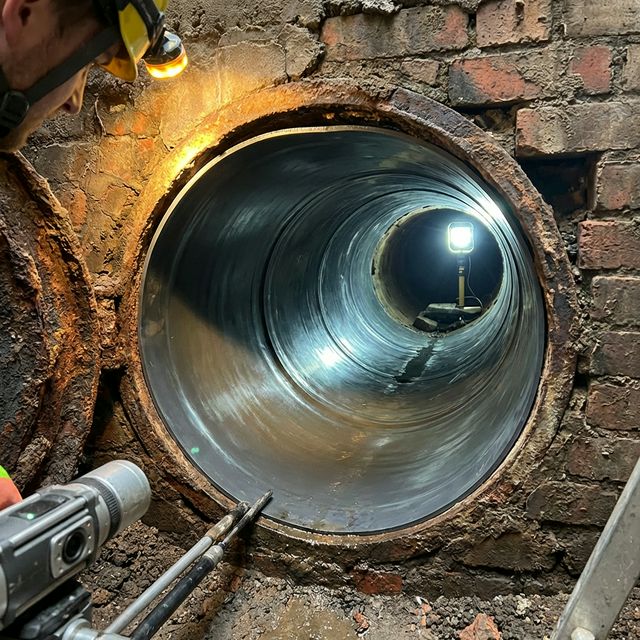
- Widespread deterioration, pipe still holds shape: cured in place lining
- Collapsed or severely bellied: pipe bursting or open cut replacement, since lining needs a host pipe
- Line runs under a driveway or mature trees: trenchless, to avoid restoration costs exceeding the plumbing
Any company that recommends full replacement without showing you camera footage first is guessing, or worse. Ask to see the run.
Sewer Service Across Gwinnett County
We handle sewer inspection and repair throughout the county, including Snellville, Suwanee, Duluth, Dacula, Grayson, Lilburn, and Buford. Sewer work often involves county coordination, and being locally based keeps that moving.
Frequently Asked Questions
How do I know if my sewer line needs repair or just cleaning?
Recurrence is the key signal. If the line blocks again within weeks of clearing, or several fixtures back up together, the pipe itself is likely damaged. A camera inspection distinguishes root intrusion, a belly, a crack, and simple buildup, which look identical from inside the house but need completely different work.
How much does sewer line repair cost in Lawrenceville GA?
Camera inspection runs $250 to $500. A spot repair of a single damaged section is typically $1,500 to $4,000. Full open cut replacement generally runs $5,000 to $15,000, and trenchless lining or bursting $4,000 to $12,000. We camera the line before quoting so the number reflects what is actually wrong.
What is a bellied sewer line?
A belly is a section that has settled into a low spot, usually from soil movement. Water and solids collect there instead of flowing through, causing repeated blockages no matter how often the line is cleaned. Correcting it means excavating that section and re-laying it to the correct fall.
Can a sewer line be replaced without digging up my yard?
Often yes. Trenchless methods replace the pipe through access pits at each end rather than an open trench, leaving the lawn, driveway, and mature trees between them undisturbed. It requires a host pipe with enough remaining structure, which the camera survey confirms.
Will tree roots come back after being cleared?
Yes, if the entry point remains. Jetting removes the root mass but not the separated joint they came through, so they regrow over following seasons. Sealing the joint or lining the pipe is what stops the cycle, because a cured liner is jointless and gives roots nowhere to enter.
Should I trust a sewer replacement quote without a camera inspection?
No. The difference between cleaning, spot repair, and full replacement is thousands of dollars and is not knowable without seeing inside the pipe. Ask any company quoting replacement to show you the camera footage of the damage they are pricing for.