
Published: August 6, 2026 | Reading time: 12 minutes
Slab leak repair in Grayson, GA is a more common call here than in most of Gwinnett County, and the reason is structural: Grayson has an unusually high proportion of homes built on concrete slab rather than crawl space. When a supply line beneath that slab fails, the water has nowhere visible to go, which is why these leaks routinely run for months before anything surfaces. Catching one early is the single largest factor in what it eventually costs.
Quick Answer: Slab Leaks in Grayson
Detection cost is applied toward the repair when we complete the work, so diagnosing it properly is not money spent twice.
Slab Leak Repair Grayson, GA: Key Numbers
Detection survey
$250 to $600
Reroute above slab
$1,500 to $3,500
Open slab spot repair
$2,000 to $4,500
Most common early sign
Warm spot on the floor
Detection time on site
1 to 2 hours
Distance from our base
8 miles, 12 to 18 min
Warning Signs of a Slab Leak
Slab leaks do give warnings. They are just quiet ones, and each is individually easy to explain away.
- Warm or hot spots on the floor. The single most distinctive sign, because hot water lines fail first and the heat transfers straight through the concrete.
- The sound of running water when every fixture in the house is shut off.
- A water bill that jumped with no change in household usage or occupancy.
- Damp or discoloured flooring, carpet, or baseboards with no surface source.
- A musty smell from mould growing in trapped moisture beneath the flooring.
- Reduced water pressure across the whole house.
- Cracks in flooring, walls, or the foundation, which indicate the leak has been running long enough to move the soil beneath.
- A hot water heater running far more often than it used to, because it is reheating water escaping under the slab.
The combination that is close to conclusive
A warm spot on the floor together with an unexplained water bill increase is, in our experience, a slab leak until proven otherwise. That pairing warrants professional detection the same week rather than watching it through another billing cycle.
Why Grayson Homes Get Slab Leaks
Three local factors compound here, and Grayson has all three at once.
A high concentration of slab built housing
Much of Grayson's residential development used slab on grade construction rather than raised crawl space foundations. That is a perfectly sound building method, but it means the supply lines run through and beneath the concrete instead of in an accessible void underneath the house.
The practical consequence is that a leak which would be a twenty minute fix in a crawl space home becomes a detection job followed by a decision about how to reach it.
Georgia red clay and seasonal movement
The clay soil under Grayson is expansive: it swells substantially when saturated and shrinks hard during dry spells. That cycle repeats every year, and it puts continuous mechanical stress on any pipe running through or beneath the slab.
This is the dominant reason slab leaks are more frequent across Gwinnett County than in regions with stable sandy soil, and it is why the failures cluster after a wet spring followed by a dry summer.
Soft copper and hot side failures
Slab built homes from the 1980s through the early 2000s commonly used soft copper tubing beneath the slab. Combined with local water chemistry, pinhole corrosion from the inside out is the typical failure mode we find.
Hot water lines fail disproportionately because heat accelerates both corrosion and thermal expansion. The line expands and contracts with every draw, abrading against concrete or gravel bedding, and it corrodes faster than the cold line running alongside it. This is exactly why a warm floor spot is such a reliable indicator.
Our guide on what causes a slab leak covers the underlying mechanisms in more technical detail.
How We Locate a Slab Leak Without Guessing
Precision here is not a nicety. The difference between locating a leak to within a foot and locating it to within a room is the difference between one small concrete opening and a demolished floor.
- Isolate and confirm. We shut the supply at the meter and monitor pressure, then isolate the hot and cold sides separately. This confirms a leak exists, establishes which side it is on, and rules out irrigation, pool, and fixture faults before anything else.
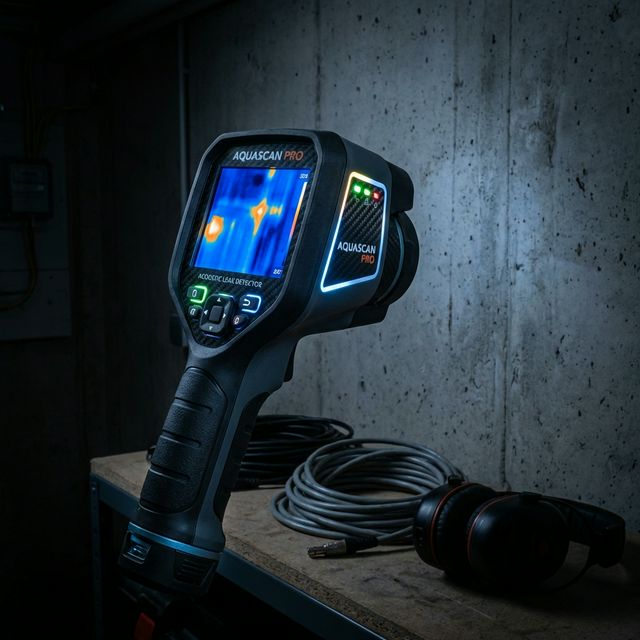
- Acoustic listening. Pressurised water escaping a pipe under concrete generates a characteristic sound. Ground microphones and amplified listening equipment trace that signature across the slab to a specific point.
- Thermal imaging. A hot water leak warms the concrete and the flooring above it. Thermal cameras render that temperature differential visible, which is particularly effective on the hot side where most slab leaks occur.
- Tracer gas where needed. For stubborn or very small leaks, an inert tracer gas is introduced into the isolated line and detected at the surface as it permeates up through the slab.
- Mark and verify. We mark the location physically, confirm it with a second method, and only then discuss repair options and prices. Two independent confirmations before anyone cuts concrete.
Detection typically takes one to two hours in a Grayson home and costs $250 to $600, applied toward the repair if you have us complete the work.
The Three Repair Methods, Honestly Compared
There is no single correct method. The right one depends on how many leaks there are, the age of the under slab plumbing, and how the house is laid out.
The third option: repipe
Where we locate multiple leaks, or the under slab plumbing is old enough that further failures are near certain, whole home repiping costs less over five years than repairing each leak as it appears. Typically $4,000 to $15,000 depending on house size.
We recommend this only when the evidence supports it. One leak in otherwise sound copper is not a repipe, and we say so.
Reroute above the slab
- Most common recommendation for a single leak. We abandon the failed section under the concrete and run a new line through walls or the attic.
- No concrete cutting at all, so no dust, no jackhammer, and no flooring reinstatement.
- Typically $1,500 to $3,500 and often completed in a day.
- Downside: the abandoned line stays under the slab, and a small amount of exposed pipe may be visible in a garage or closet.
Open the slab and repair
- Direct repair of the failed section, with the pipe restored to its original route.
- Makes sense when the leak is easily accessible and the rest of the system is sound.
- Typically $2,000 to $4,500 including concrete reinstatement.
- Downside: noise, concrete dust, and flooring has to be lifted and replaced over the opening.
What Slab Leak Work Costs in Grayson, GA
Slab Leak Costs in Grayson, GA (2026)
Electronic detection survey
$250 to $600 (applied to repair)
Reroute above slab, single line
$1,500 to $3,500
Open slab and spot repair
$2,000 to $4,500
Epoxy pipe lining under slab
$3,000 to $6,000
Whole home repipe, multiple failures
$4,000 to $15,000
Pressure reducing valve if pressure is high
$350 to $700
Flooring reinstatement after slab opening
Varies by material, quoted separately
If your incoming pressure tests above 80 psi, fitting a pressure reducing valve alongside the repair is worth doing. Sustained high pressure accelerates pinhole formation, and it is a cheap way to protect the rest of the system.
Why Waiting Multiplies the Cost
A slab leak does not stay a plumbing problem, and this is the part homeowners most often underestimate.
Foundation movement
Water escaping under a slab saturates the soil beneath it. Saturated red clay loses bearing capacity and moves, and because the saturation is localised around the leak, it moves unevenly. Prolonged leakage can produce differential settlement, which appears as cracks in floors, walls, and eventually the foundation itself.
Mould in trapped moisture
Moisture held under flooring with no airflow is close to ideal growing conditions. Remediation frequently costs more than the plumbing repair that caused it, and it is not always covered by the same insurance provisions.
The cost curve
A leak found in month one is a plumbing job. The same leak found at month eight can involve flooring replacement, drywall, mould remediation, and in serious cases structural assessment. The plumbing element barely changes; everything around it does.
Insurance and Documentation
Homeowner policies commonly cover the resulting water damage and the cost of accessing the pipe, but frequently exclude the failed pipe itself. Many also distinguish sudden failures from gradual ones, which is precisely where slab leaks fall awkwardly.
What consistently helps a claim is documentation. A professional detection report establishing the location, the cause, and the date found gives the adjuster something concrete to work with. Photograph everything before repair begins, and keep the removed section of pipe if one is cut out.
We provide a written detection report as standard on every slab leak survey, specifically because it is often needed later.
Response Times and Coverage in Grayson, GA
We dispatch from Lawrenceville, GA 30046. Grayson sits roughly 8 miles away, a 12 to 18 minute drive outside peak traffic, and we cover the 30017 ZIP area in full.
Because our base is inside Gwinnett County rather than across metro Atlanta, emergency calls in Grayson typically see a licensed plumber on site inside 20 to 30 minutes at any hour. Scheduled work is normally booked within a few days rather than weeks.
Neighbourhoods and areas we cover in Grayson
Coverage includes downtown Grayson, the Rosebud Road corridor, Grayson Highway, Bay Creek, and the subdivisions around Grayson Parkway, along with the surrounding subdivisions and unincorporated pockets sharing the 30017 postal area.
Main approaches are Grayson Highway, Rosebud Road, and Highway 78 via Snellville, which is what keeps arrival windows predictable even during commuter periods.
Same pricing, no travel surcharge
Pricing in Grayson is identical to Lawrenceville. There is no mileage fee, no reduced service menu for outlying cities, and no after hours multiplier added at the end of the invoice. You get the number before work starts, at 2am the same as 2pm.
We also serve Snellville, Dacula, Lilburn, Duluth, Suwanee, and Buford. Full details are on the plumber Grayson page and the service areas hub.
Every Plumbing Service Available in Grayson
This is one of nineteen services we deliver in Grayson at Lawrenceville pricing. The ones most often requested alongside it are:
- slab leak repair in Grayson, GA
- leak detection in Grayson, GA
- whole home repiping in Grayson, GA
- water line repair in Grayson, GA
- burst pipe repair in Grayson, GA
- 24/7 emergency plumbing in Grayson, GA
The complete list is on our plumbing services page, and every service on it is available throughout Grayson and the wider Gwinnett County area.
Frequently Asked Questions
How much does slab leak repair cost in Grayson, GA?
Electronic detection runs $250 to $600 and is applied toward the repair. Rerouting a single line above the slab is typically $1,500 to $3,500, opening the slab for a spot repair $2,000 to $4,500, and a full repipe $4,000 to $15,000 where multiple failures exist. We give you every applicable option with its price before you decide.
What are the first signs of a slab leak?
Warm spots on the floor, the sound of running water with every fixture off, an unexplained water bill increase, damp flooring or carpet with no surface source, a musty smell, and reduced pressure across the house. A warm floor spot combined with a higher bill is close to conclusive and warrants detection that week.
Why does Grayson have more slab leaks than other areas?
Three factors compound here. Grayson has an unusually high proportion of slab on grade homes rather than crawl space foundations, the local red clay is expansive and moves seasonally, and slab built homes from the 1980s to early 2000s commonly used soft copper beneath the concrete. Together those produce more failures than any one would alone.
Can a slab leak be repaired without breaking the concrete?
Often yes. Rerouting the affected line above the slab through walls or the attic avoids cutting concrete entirely, and it is our most common recommendation for a single leak. It is usually faster, cheaper, and far less disruptive than opening the floor, with no flooring reinstatement required.
How do you find a slab leak without digging up the floor?
We isolate the hot and cold sides to confirm which is leaking, then use acoustic listening equipment to trace the escaping water through the concrete, thermal imaging to detect the heat signature of a hot line leak, and tracer gas for stubborn cases. We confirm with two independent methods before anyone cuts anything.
What happens if I ignore a slab leak?
Water saturates the soil under the foundation, and saturated clay loses bearing capacity and moves unevenly, which can produce differential settlement and cracking in floors, walls, and the foundation. Mould also grows in trapped moisture under flooring. A leak found in month one is a plumbing job; at month eight it can involve flooring, remediation, and structural assessment.
Does homeowners insurance cover slab leaks in Georgia?
Policies commonly cover the resulting damage and the cost of accessing the pipe, but often exclude the failed pipe itself, and many distinguish sudden from gradual failures. A professional detection report documenting location, cause, and date found substantially helps a claim, which is why we provide one as standard.
Why do hot water lines cause most slab leaks?
Heat accelerates both corrosion and thermal expansion. The hot line expands and contracts with every draw, abrading against the concrete or gravel bedding around it, and it corrodes faster than the cold line beside it. That is why the majority of slab leaks are on the hot side and why a warm floor spot is such a reliable early sign.
Do you serve all of Grayson, GA?
Yes, the full 30017 area including downtown Grayson, the Rosebud Road corridor, Grayson Highway, Bay Creek, and the surrounding subdivisions. Grayson is about 8 miles from our Lawrenceville base, a 12 to 18 minute drive, making it one of our two closest service areas.